Noah Weber · 15 October 2026
Lichen Roles in Stabilizing Soil After Mining Operations Across Arid Regions
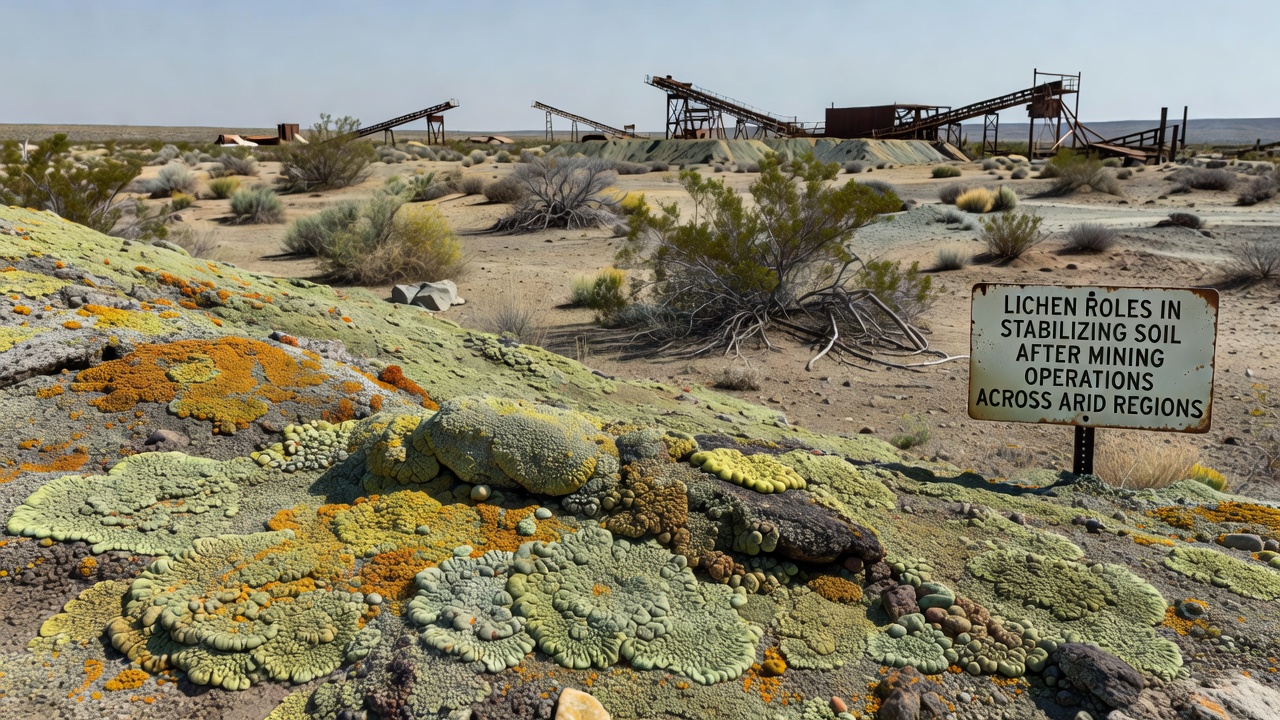
Arid regions present unique challenges for ecological recovery after mining because low rainfall, high evaporation rates, and fragile topsoils slow natural regeneration. Lichens, as symbiotic associations between fungi and photosynthetic partners such as algae or cyanobacteria, play measurable roles in binding loose particles and initiating soil development on disturbed surfaces. Researchers have documented these organisms colonizing exposed rock and tailings within months of site abandonment in places like the Mojave Desert and the Australian outback.
Soil stabilization begins when lichen thalli adhere to mineral grains through fungal hyphae that secrete extracellular polysaccharides. These compounds act as adhesives, reducing wind and water erosion on slopes that would otherwise lose several centimeters of material each year. Data from long-term monitoring plots show that sites with established lichen cover retain up to 40 percent more fine particles than bare control areas after five years.
Mechanisms of Soil Binding and Nutrient Input
Lichens contribute to soil structure through both physical and chemical processes. Their growth expands cracks in rock via repeated wetting and drying cycles, while organic acids slowly dissolve minerals and release nutrients such as potassium and phosphorus. Cyanolichens in particular fix atmospheric nitrogen at rates documented between 1 and 5 kilograms per hectare annually in arid crust communities, according to measurements collected by field teams in the southwestern United States.
Moisture retention improves as lichen mats trap dust and create microtopography that captures runoff during infrequent rain events. This localized water storage supports subsequent colonization by mosses and vascular plants. Studies conducted across multiple mining districts indicate that plots with lichen cover maintain soil moisture levels 15 to 25 percent higher during dry seasons compared with uncolonized tailings.
Regional Patterns in Post-Mining Recovery
Recovery trajectories vary by climate and substrate chemistry. In South African gold mine tailings, species from the genera Xanthoparmelia and Acarospora have been recorded forming continuous crusts within eight years, whereas similar surfaces in central Australia required closer to twelve years under comparable rainfall regimes. Government monitoring programs in Western Australia track these timelines through repeated vegetation surveys and erosion pin measurements.
Canadian reclamation projects in the Yukon Territory have incorporated lichen inoculation techniques on copper mine sites since the early 2010s. Field trials demonstrated that transplanting fragments of native crust lichens accelerated surface stabilization by roughly three years relative to natural succession alone. Similar approaches are now under evaluation in Chilean copper operations in the Atacama Desert, where dust control remains a regulatory priority.
Interactions with Other Restoration Practices
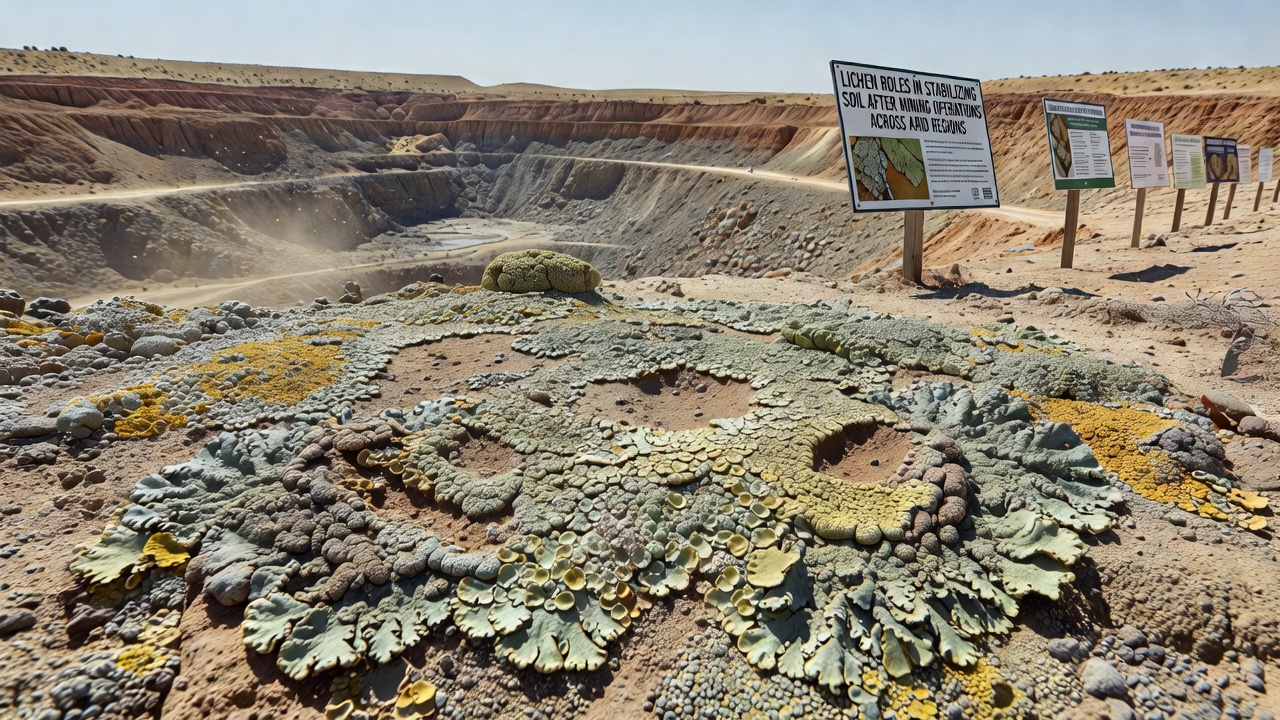
Lichen establishment often coincides with the application of organic amendments and contouring designed to reduce slope angles. When these engineering measures create sheltered microsites, lichen cover expands more rapidly and further decreases sediment transport during storm events. Research teams have noted that combining lichen-friendly surface textures with native seed mixes produces higher overall plant cover after a decade than either technique used in isolation.
Heavy metal tolerance varies among lichen species. Some tolerate elevated concentrations of copper and arsenic by sequestering metals within fungal cell walls, while others avoid such substrates entirely. Site-specific surveys therefore guide species selection when active inoculation is considered. Data collected through October 2026 at several pilot locations continue to refine tolerance thresholds for common arid-region lichens.
Monitoring and Measurement Approaches
Remote sensing combined with ground-truth lichen cover estimates provides scalable assessment tools. Multispectral imagery detects changes in surface reflectance as crusts develop, allowing operators to track stabilization progress without exhaustive field visits. Ground measurements of shear strength and aggregate stability supply complementary quantitative indicators used by regulatory agencies in multiple countries.
Long-term datasets reveal that lichen-dominated crusts reduce dust emissions by measurable margins. One multi-year study in Nevada documented a 60 percent drop in particulate matter leaving reclaimed plots once lichen cover exceeded 30 percent. These reductions support compliance with air quality standards while also protecting adjacent rangeland from dust deposition.
Conclusion
Lichens function as early colonizers that bind soil particles, moderate moisture, and supply nutrients in arid post-mining environments. Their contributions appear consistently across continents when substrates allow establishment, and monitoring programs continue to quantify the resulting reductions in erosion and dust loss. Integration with conventional reclamation techniques shows promise for shortening recovery periods, while ongoing field data from diverse mining districts refine practical guidelines for future projects.