Paul Roth · 1 October 2026
Lichen Contributions to Air Quality Monitoring in Industrial Zones: Species Specific Responses to Pollutants
Industrial zones release complex mixtures of sulfur dioxide, nitrogen oxides, heavy metals and particulate matter that affect local ecosystems in measurable ways, and researchers have documented how lichens serve as reliable bioindicators because they absorb atmospheric elements directly through their thalli without roots or protective cuticles. Different lichen species display distinct sensitivity thresholds, which allows scientists to map pollution gradients by recording presence, absence and health indicators such as thallus color change or reproductive structure reduction. Studies conducted near steel plants and petrochemical facilities show that mapping these patterns provides spatial data on pollutant dispersion that complements instrumental readings from fixed stations.
Species Responses to Common Industrial Pollutants
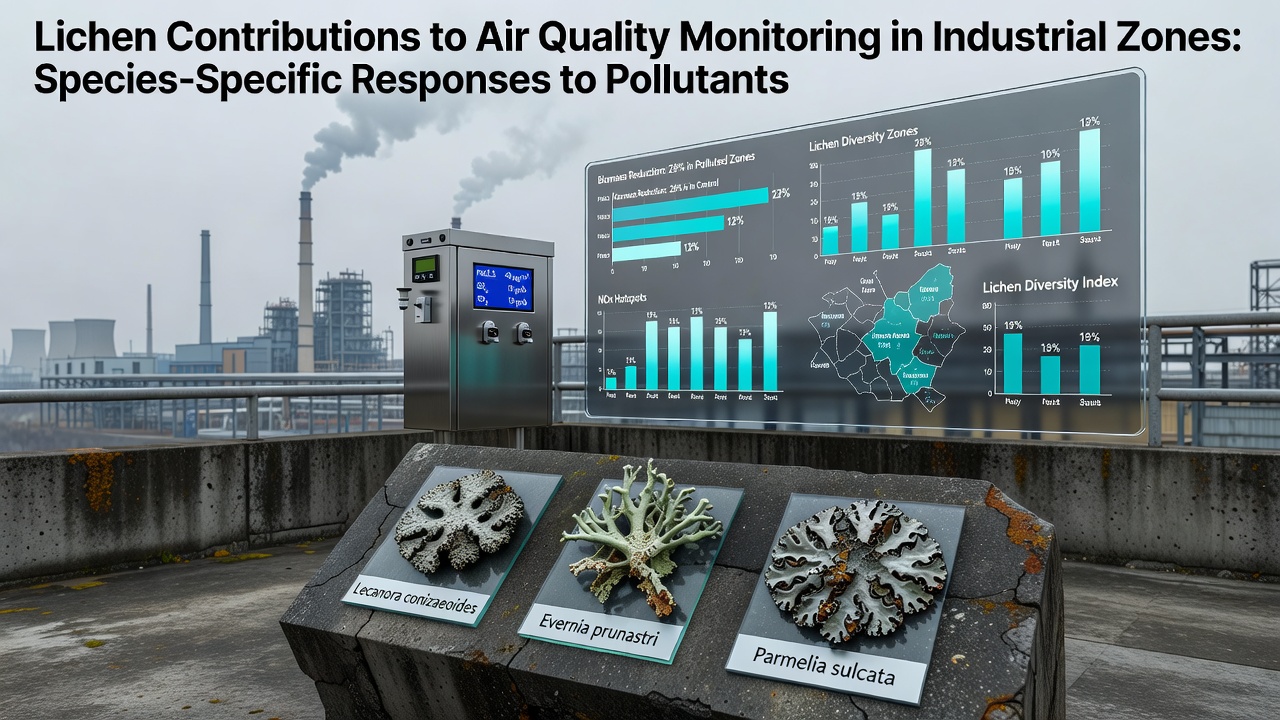
Lecanora conizaeoides thrives in areas with elevated sulfur dioxide yet declines sharply when ammonia concentrations rise, whereas Xanthoria parietina tolerates high nitrogen loads from vehicle exhaust and fertilizer production but shows reduced photosynthesis under elevated ozone levels. Flavoparmelia caperata, by contrast, disappears quickly from sites where heavy metals such as lead and cadmium exceed background thresholds, making its absence a useful signal of long-term metal deposition. Researchers have quantified these responses by measuring chlorophyll fluorescence and lichen cover percentages along transects radiating from emission sources, and data collected across multiple facilities indicate that combining several indicator species improves resolution of pollutant type and intensity.
Monitoring Protocols in Industrial Settings
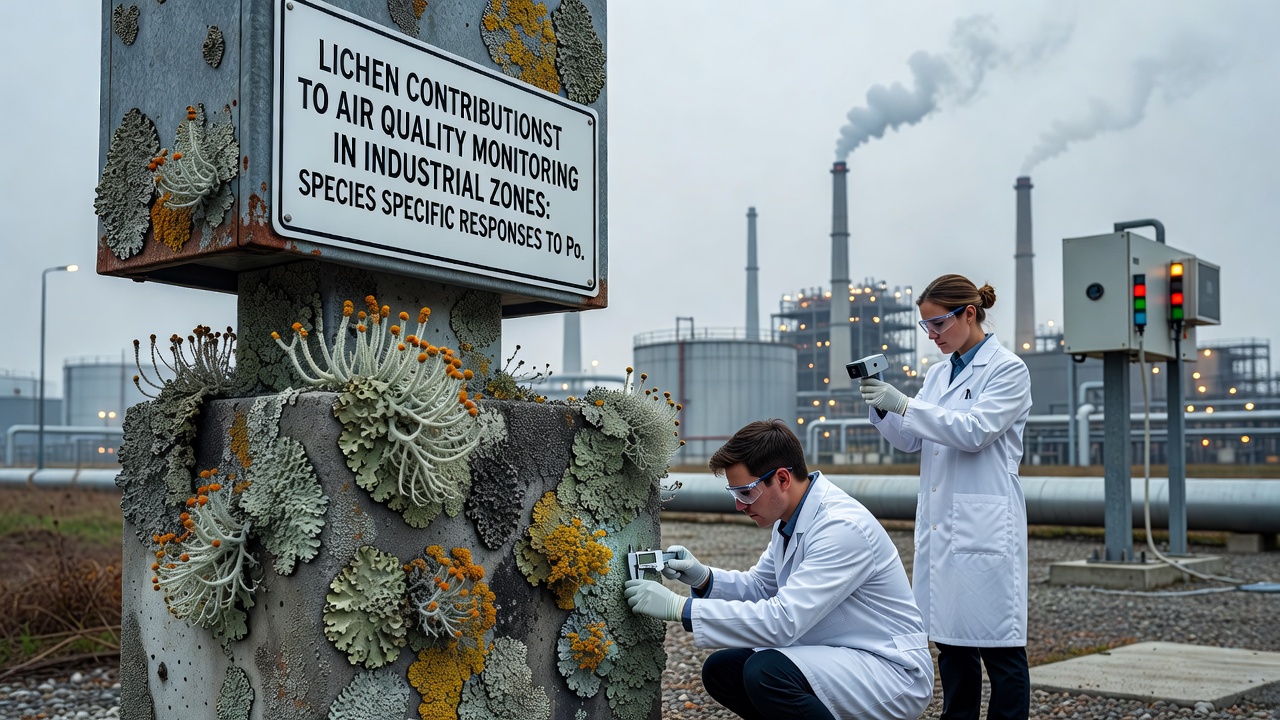
Standard protocols involve selecting reference species with known tolerance ranges, establishing permanent plots at varying distances from stacks and vents, and recording metrics every three to six months. In October 2026 the European Environment Agency released updated guidance that recommends pairing lichen surveys with passive samplers for nitrogen dioxide to cross-validate results in zones where seasonal wind patterns shift pollutant plumes. Teams in Canada and Australia have adapted similar methods around mining operations, noting that species such as Usnea subfloridana recover slowly after emission reductions, which provides evidence of improving conditions over multi-year periods.
One study near a coal-fired power plant revealed that Hypogymnia physodes maintained healthy thalli only beyond 4 kilometers from the facility, while closer specimens exhibited bleached margins and lowered potassium content. Parallel measurements of bark pH showed acidification correlating with the same distance gradient, confirming that lichens integrate both gaseous and depositional impacts. Observers note that seasonal variations in rainfall can temporarily mask metal accumulation, so annual averages rather than single sampling events form the basis for regulatory comparisons.
Integration with Regulatory Frameworks
Environmental agencies incorporate lichen data into broader air quality assessments because the organisms provide continuous, low-cost coverage across large areas that fixed monitors cannot match. The United States Environmental Protection Agency has referenced lichen surveys in reports evaluating secondary standards for sulfur oxides, while the Australian Department of Climate Change, Energy, the Environment and Water has funded pilot programs around port facilities where shipping emissions affect adjacent industrial parks. These programs track shifts in community composition rather than single species counts, which reduces false positives caused by natural succession or substrate differences.
Long-term datasets demonstrate that emission control upgrades at smelters correlate with recolonization by formerly absent species within five to eight years, although full community recovery often requires more than a decade. Researchers compare pre- and post-intervention lichen maps to quantify the spatial extent of improvement, and findings feed into cost-benefit analyses for future pollution abatement investments. Coordination between lichenologists and air quality modelers has refined deposition estimates for particles containing trace elements, because lichen tissue analysis supplies direct measurements that atmospheric models can calibrate against.
Challenges and Methodological Refinements
Substrate variability, microclimate differences and historical land use can influence lichen distribution independently of current pollution loads, so protocols now require careful site selection and statistical controls for these factors. Advances in DNA metabarcoding allow rapid identification of cryptic species that traditional morphology-based surveys might overlook, increasing the precision of tolerance classifications. In industrial zones where multiple emission sources overlap, multivariate analyses separate the effects of individual pollutants by examining response patterns across suites of species rather than relying on single indicators.
Training programs for environmental technicians emphasize standardized photographic documentation and portable spectrometers for on-site chlorophyll measurements, which speeds data collection without sacrificing accuracy. International workshops held in 2025 highlighted successful applications in Asian manufacturing corridors and South American mining districts, underscoring the global transferability of lichen-based approaches when local species lists are calibrated against known pollution gradients.
Conclusion
Lichen monitoring supplies spatially dense, biologically relevant information that strengthens air quality management in industrial zones where conventional instrumentation alone leaves gaps in coverage. Species-specific responses to sulfur dioxide, nitrogen compounds, heavy metals and ozone create distinct signatures that researchers translate into maps and trend analyses used by regulatory bodies worldwide. Continued refinement of survey methods and integration with emerging sensor networks will likely expand the role these organisms play in documenting emission changes and ecosystem recovery trajectories.